

Juried Art Services

About us

We work alongside
the arts

One turnkey platform for art fairs, festivals, galleries, museums and schools: applications, jurying, booth fees, site planning, admissions, art sales and communications. More than two decades side by side with organizers, jurors and artists.

How it fits together

From the studio to the sale

One platform carries a work of art the whole way.

  1. 1Upload
  2. 2Jury
  3. 3Show
  4. 4Sell

Featured work: Jennifer McCurdy, Climbing Coral Vessel, porcelain. Around it, works by artists who apply through Juried Art Services.

Artists upload full-resolution work from a phone or the studio.

Jurors see every detail, on any screen, on their own time.

Accepted work goes up at the show, in front of buyers.

It sells at the show, and online as artist storefronts open. A red dot marks it sold.

Where you'll find us

Alongside the arts

Paul Fisher leaning on a Smithsonian Institution podium
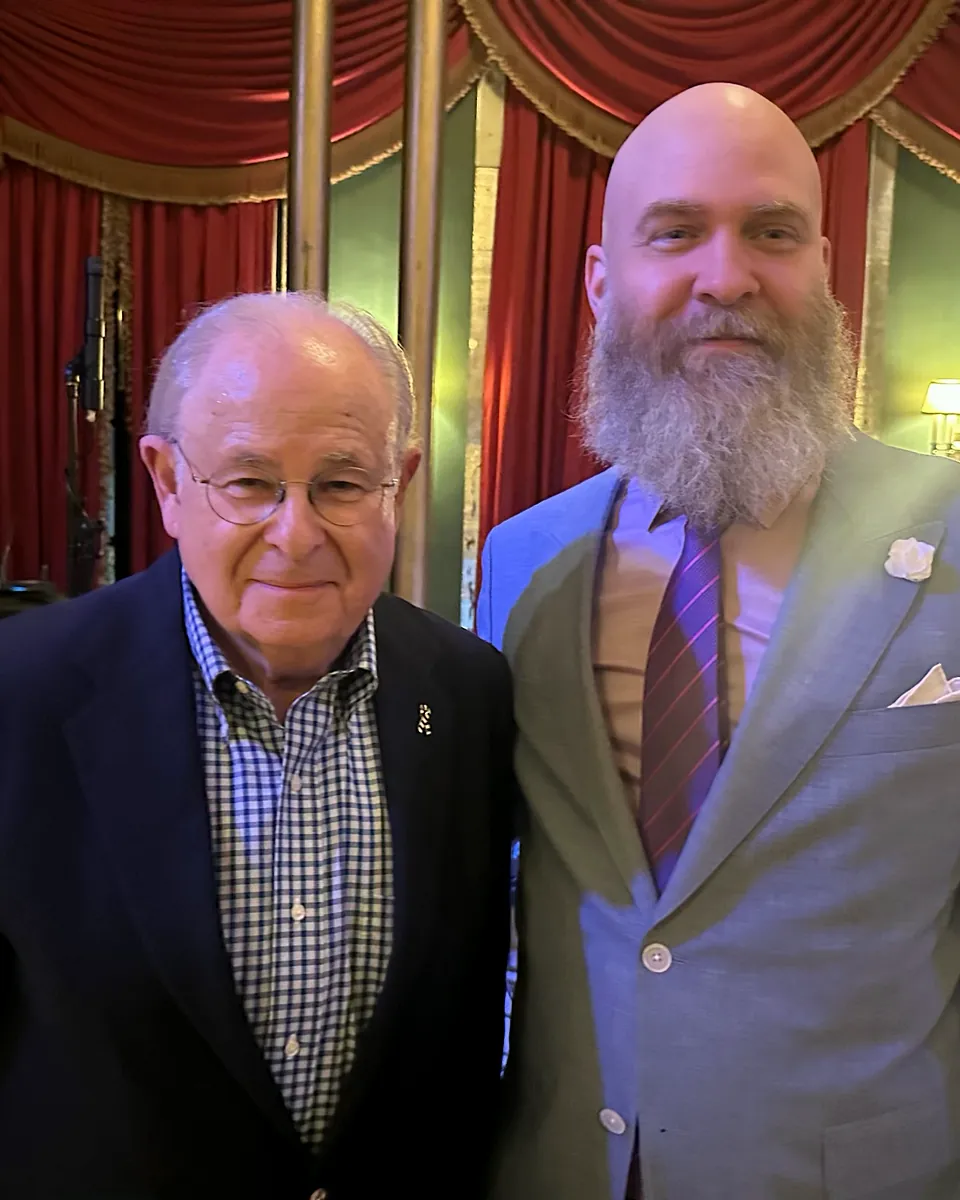
Jeffrey Gilbert with Dusty Sang, co-founder of the Ryan Licht Sang Bipolar Foundation, whose INSIGHTS competitions Juried Art Services supports
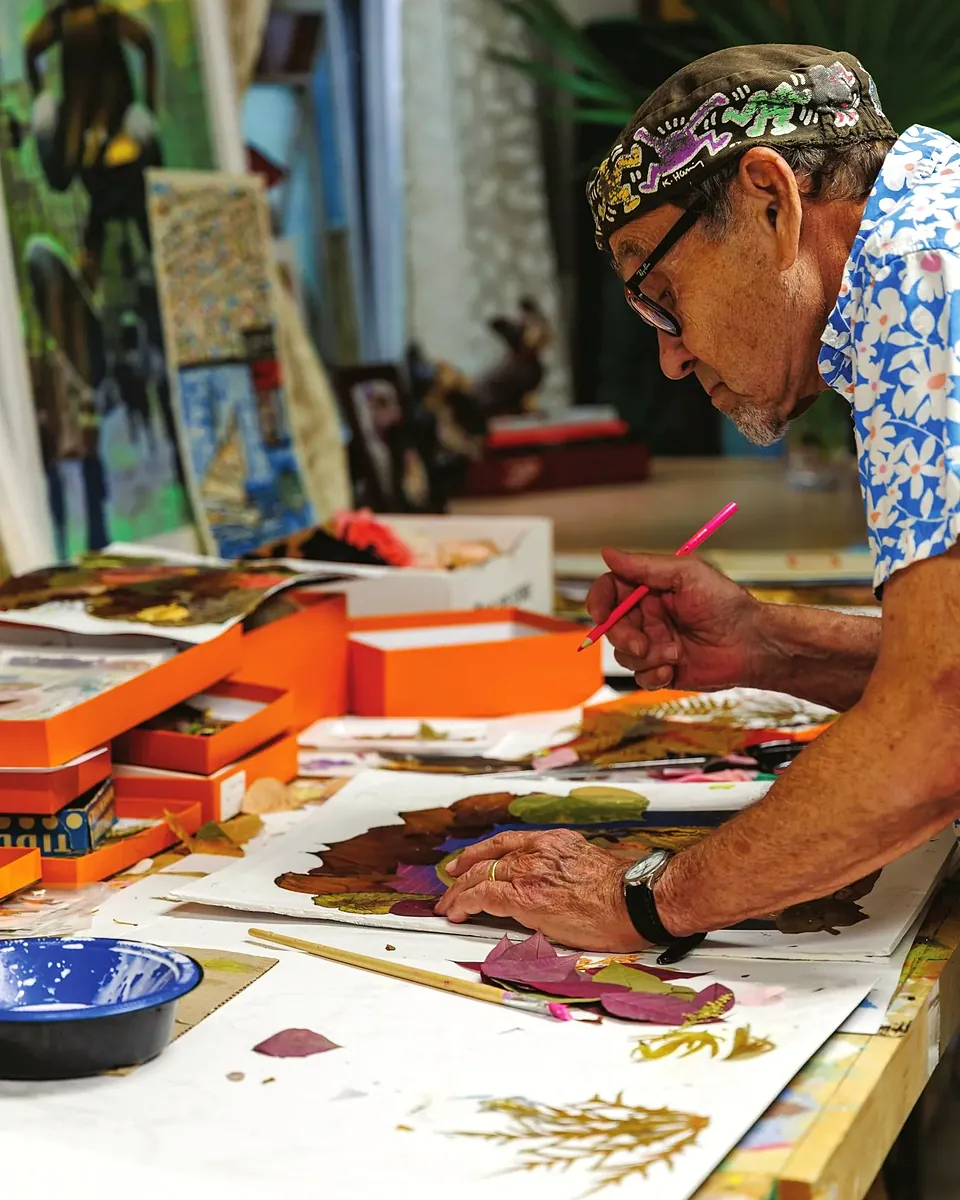
Bruce Helander at work on a collage at his studio table
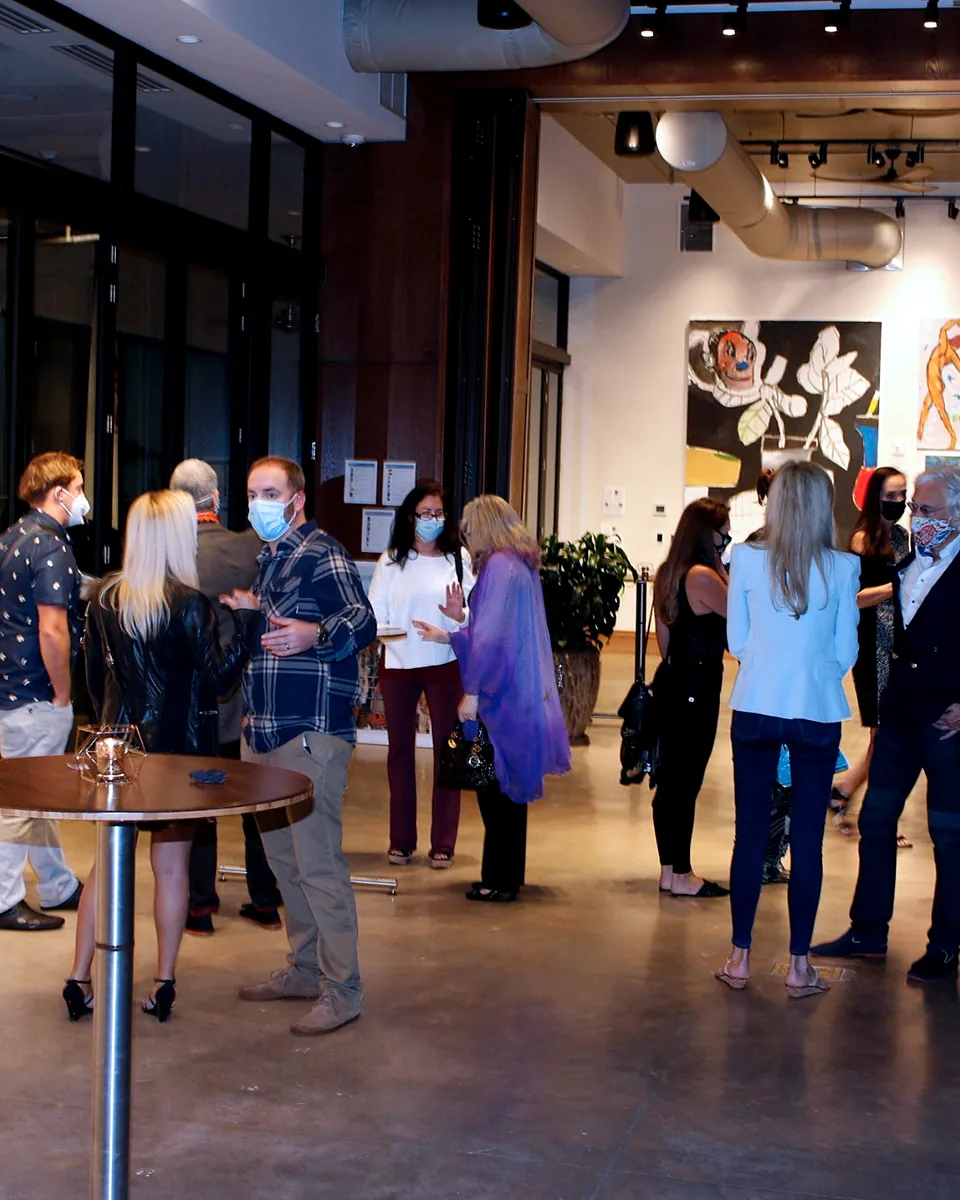
Guests at an opening at the Paul Fisher Gallery at The Ben
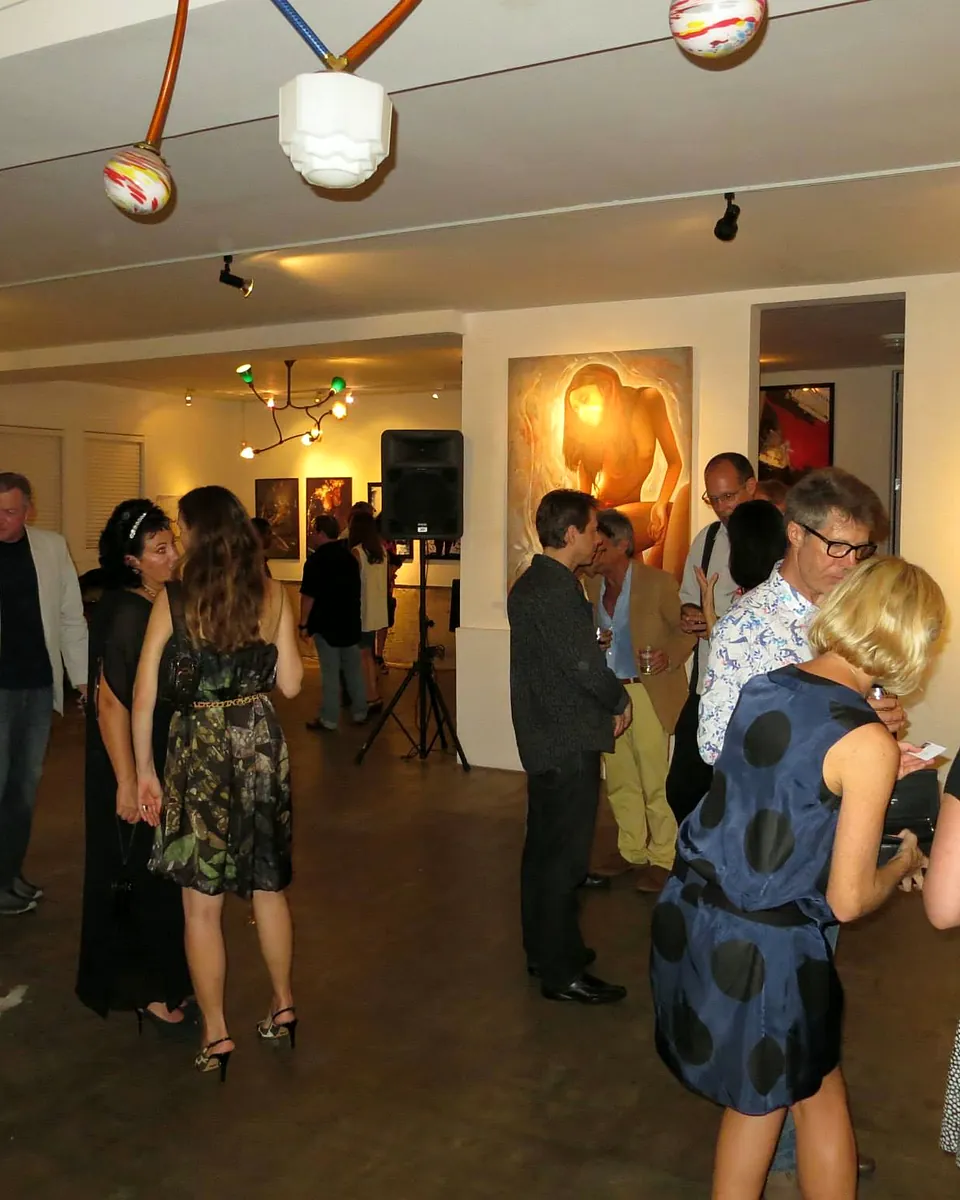
A crowd at the Faces and Figures opening at the Paul Fisher Gallery in Palm Beach
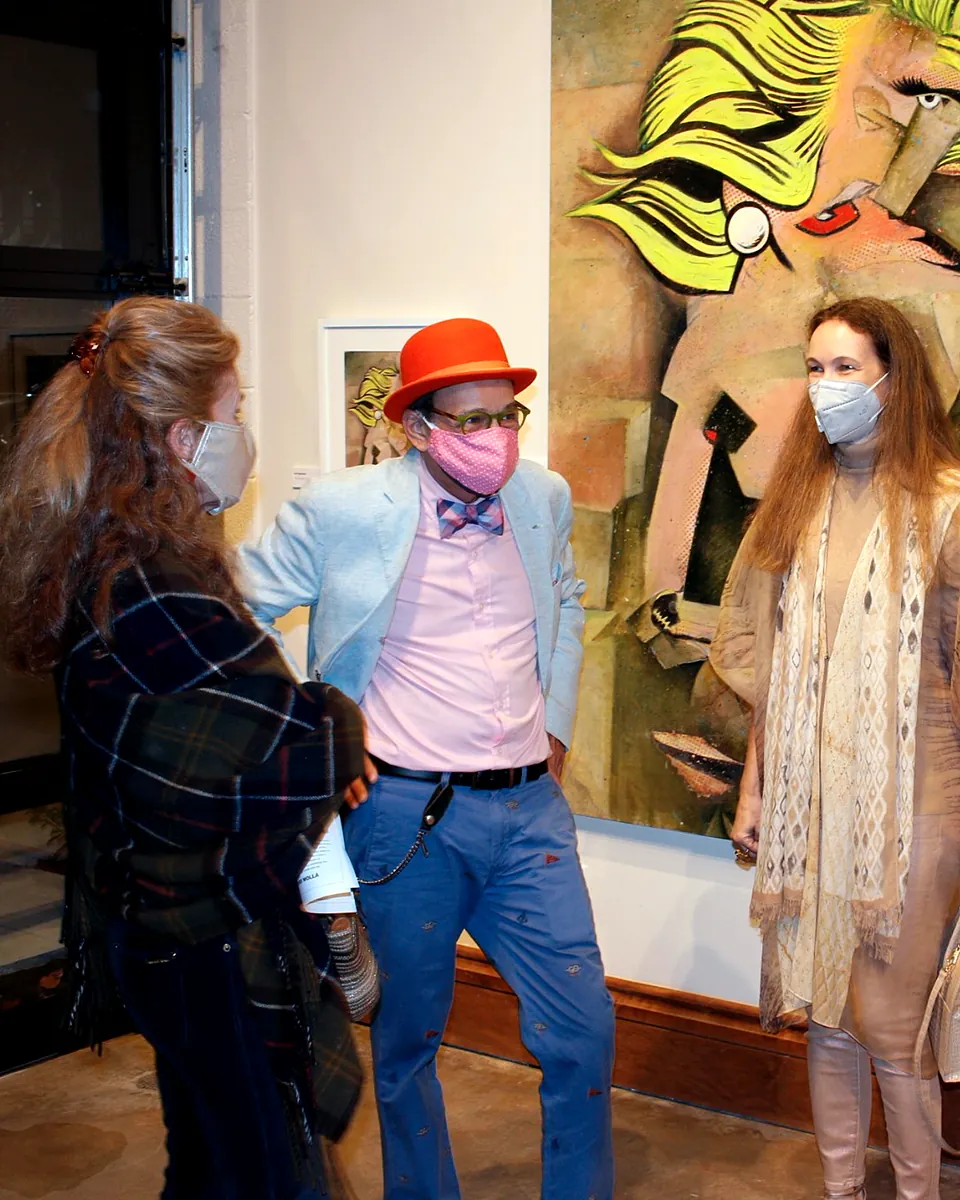
Bruce Helander, in his orange hat, with guests beside a large painting at the Paul Fisher Gallery
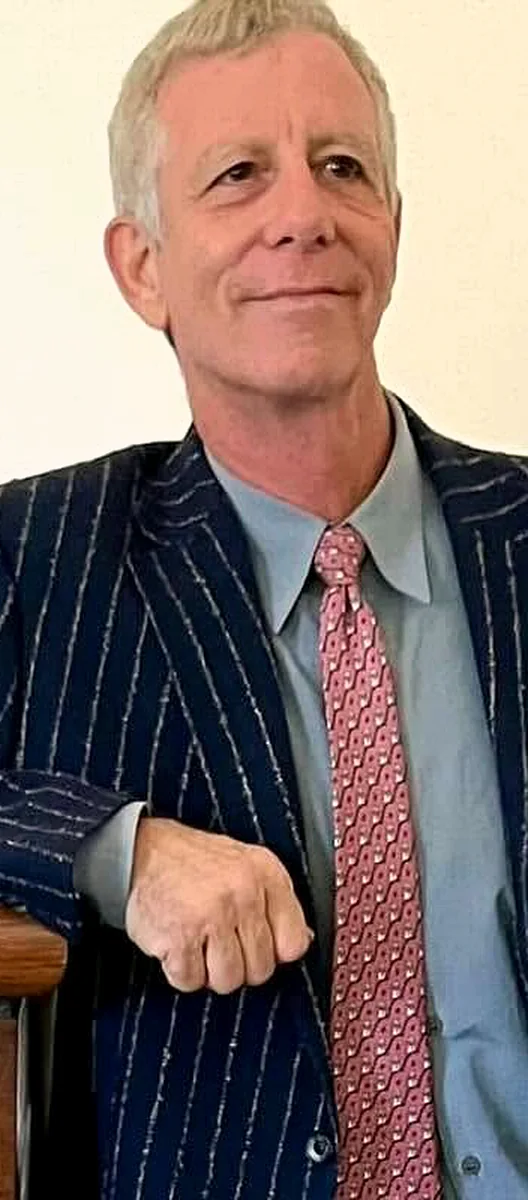
Paul Fisher, founder and CEO of Juried Art Services, in a pinstripe jacket
Paul FisherFounder & CEO
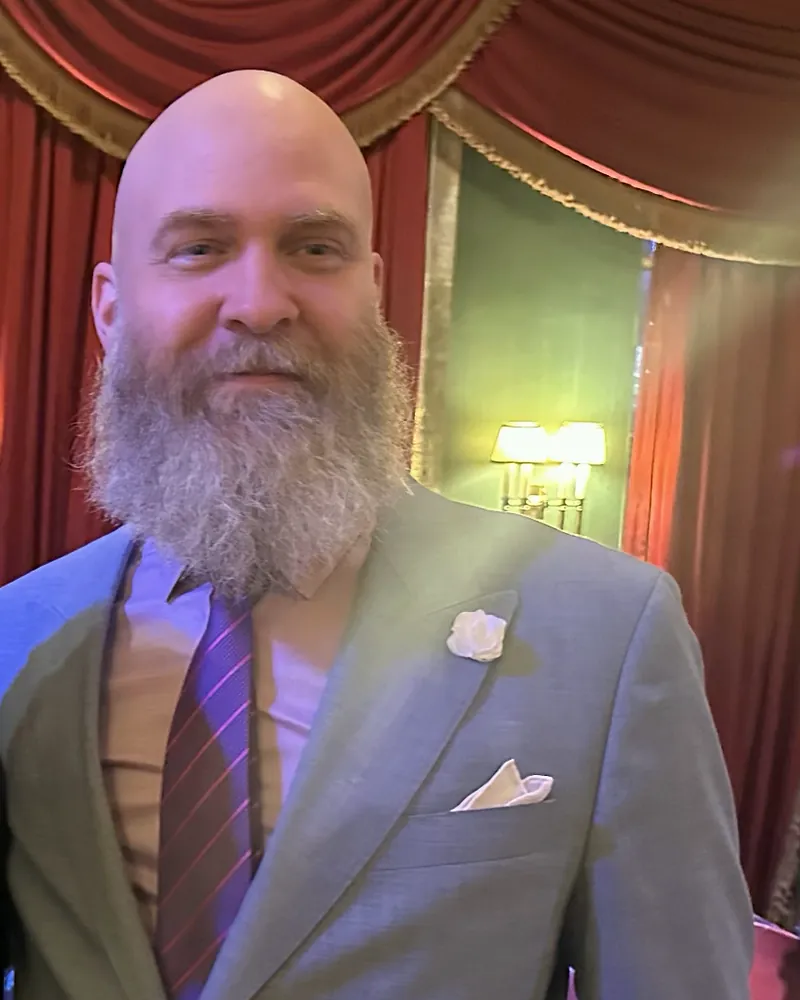
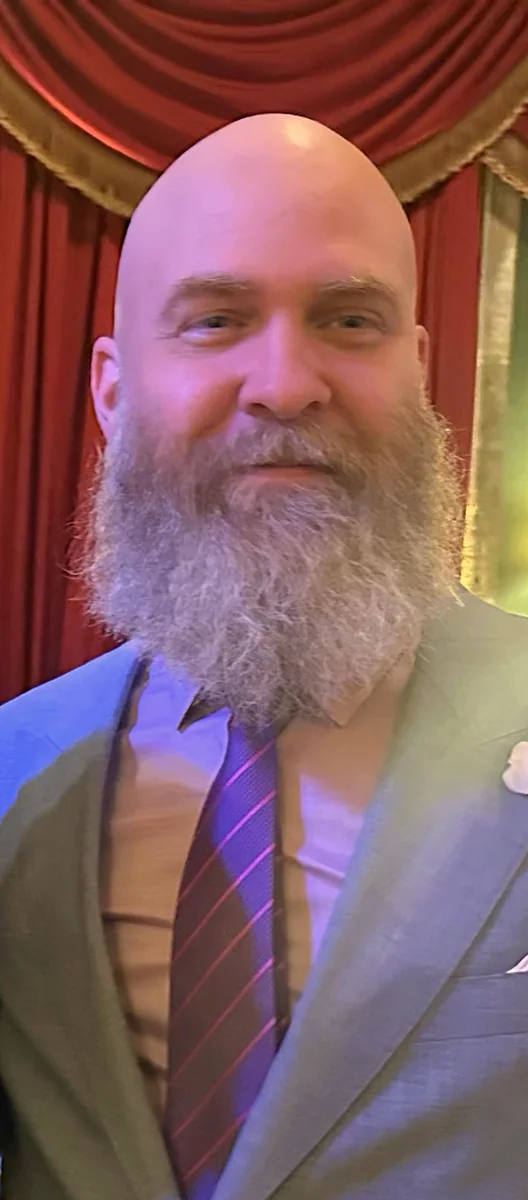
Jeffrey Gilbert, co-founder of Juried Art Services, in a gray suit and striped tie
Jeffrey GilbertCo-Founder
Bruce Helander, senior special advisor, in his orange hat in front of his artwork
Bruce HelanderSenior Special Advisor

In the room.
At the show.

Life in the arts

We live the arts, too

Bruce makes collages in his studio. Paul runs a gallery in Palm Beach. Jeffrey is in a museum whenever he can be. We build for the shows we go to.

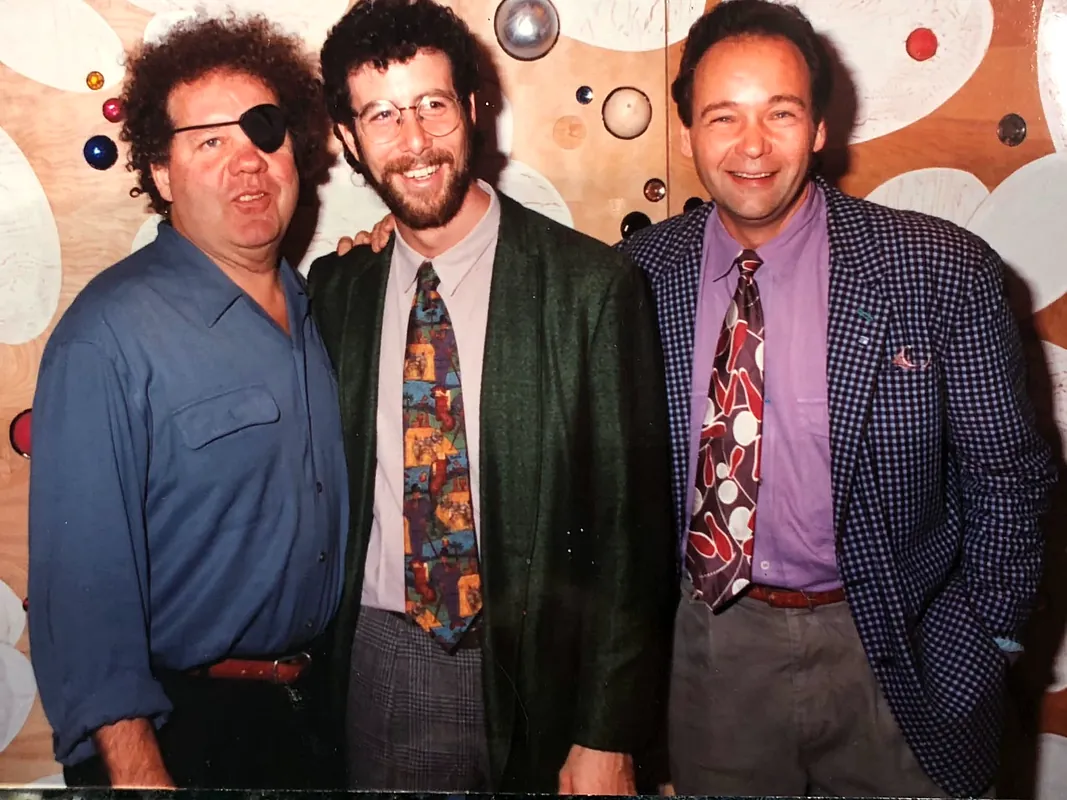
Paul Fisher in his younger, bearded years with the glass artist Dale Chihuly and Bruce Helander
Paul, bearded, with Dale Chihuly and Bruce Helander
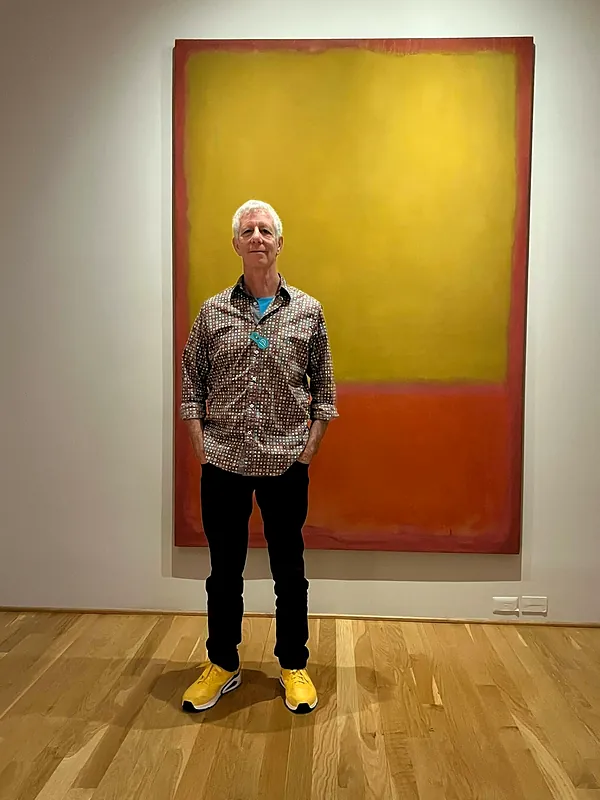
Paul Fisher standing in front of a Mark Rothko painting of yellow over orange
Paul and a Mark Rothko
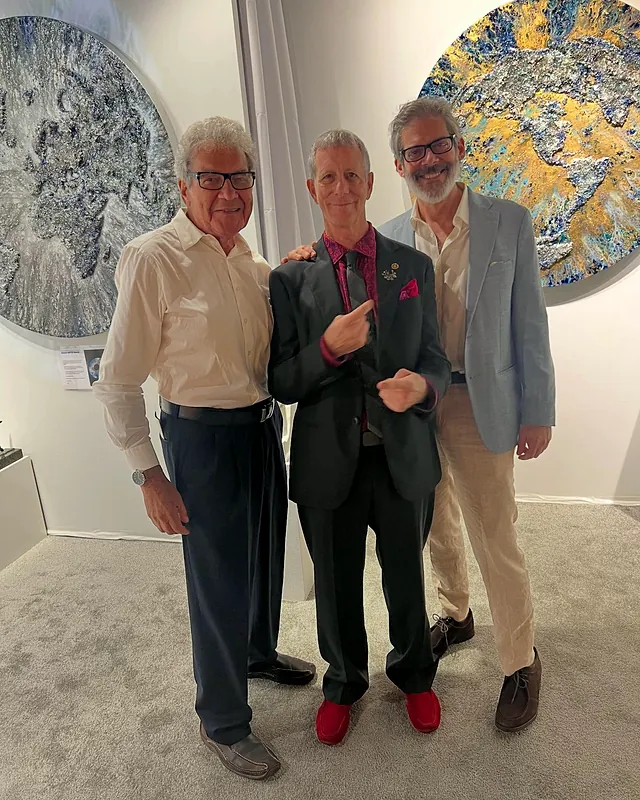
Paul Fisher with two artists in front of large painted plates at an exhibition
Paul with artists at an exhibition
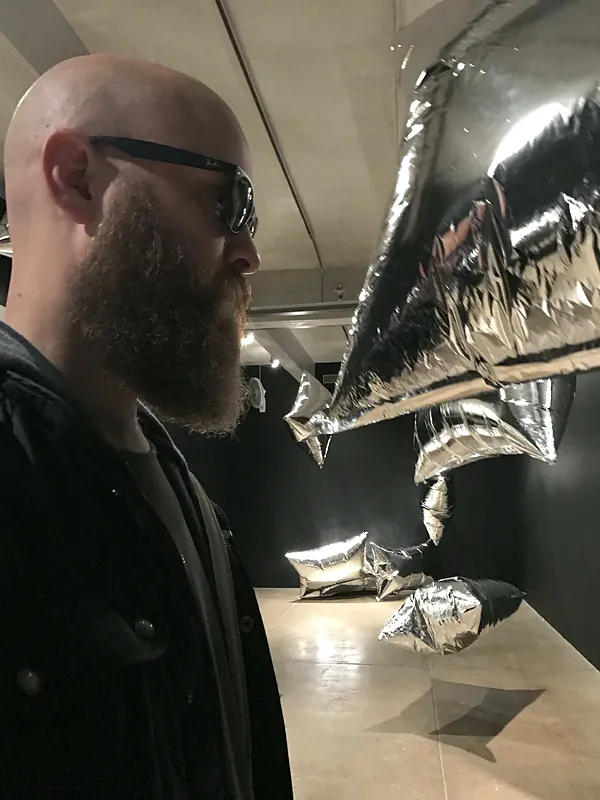
Jeffrey Gilbert among Andy Warhol's floating silver balloons, Silver Clouds, at The Andy Warhol Museum in Pittsburgh
Jeffrey in Warhol's Silver Clouds, Pittsburgh
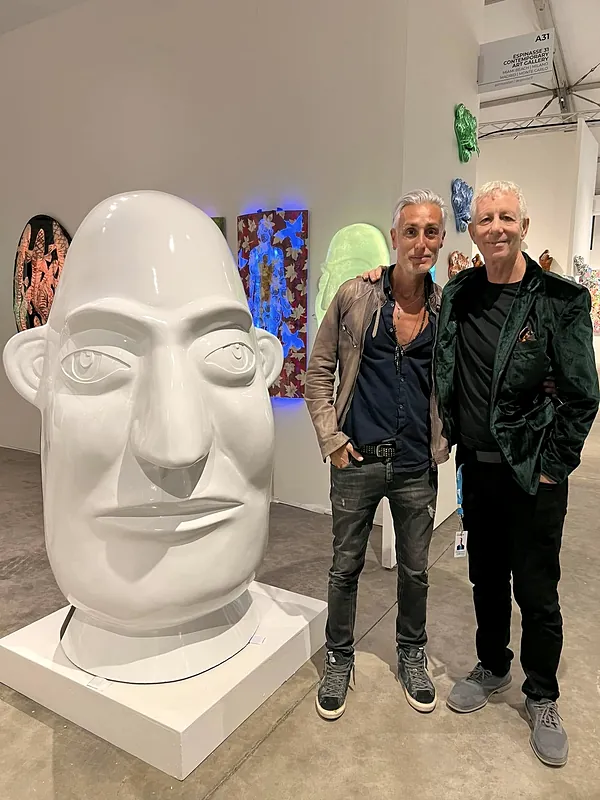
Paul Fisher with an artist beside a giant white head sculpture at an exhibition
Paul at an opening
Paul Fisher seated with his mentor, the glass artist Dale Chihuly
Paul with his mentor, glass artist Dale Chihuly
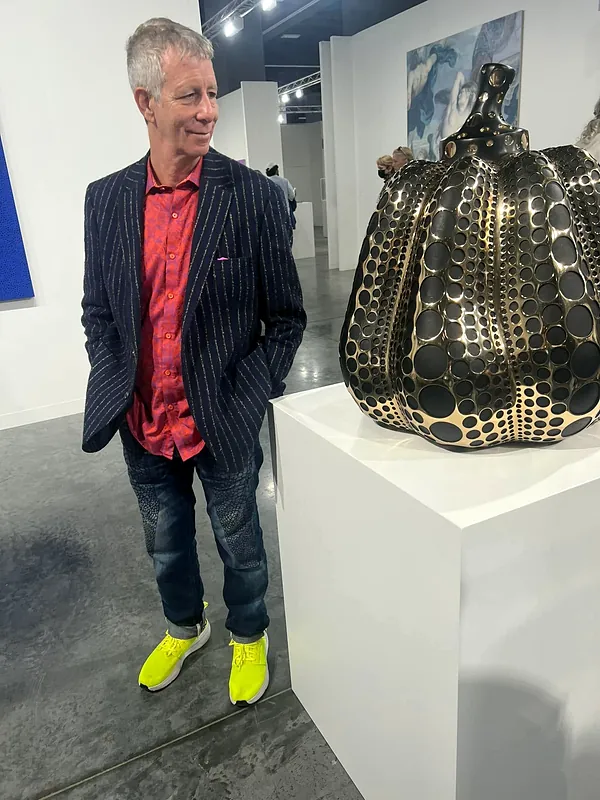
Paul Fisher beside a polka-dot pumpkin sculpture in a gallery
Paul, in the galleries
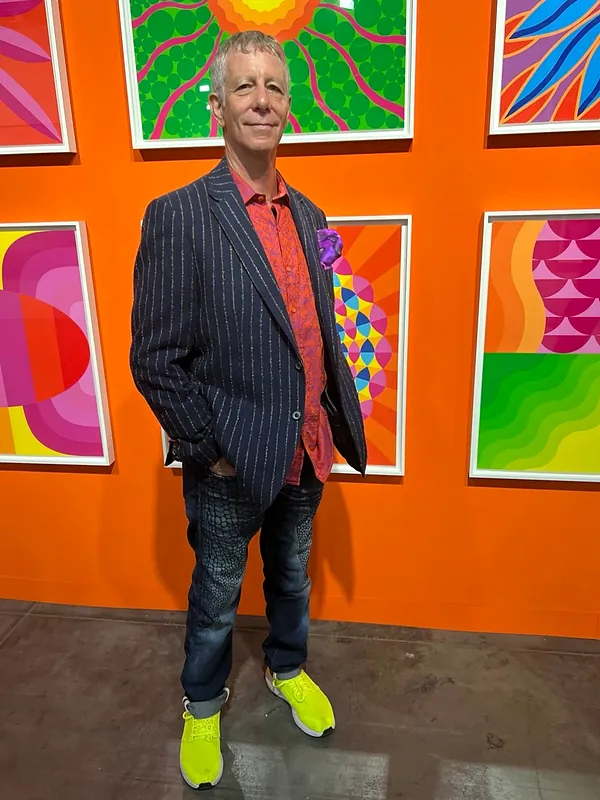
Paul Fisher against an orange gallery wall hung with colorful paintings
Color, everywhere
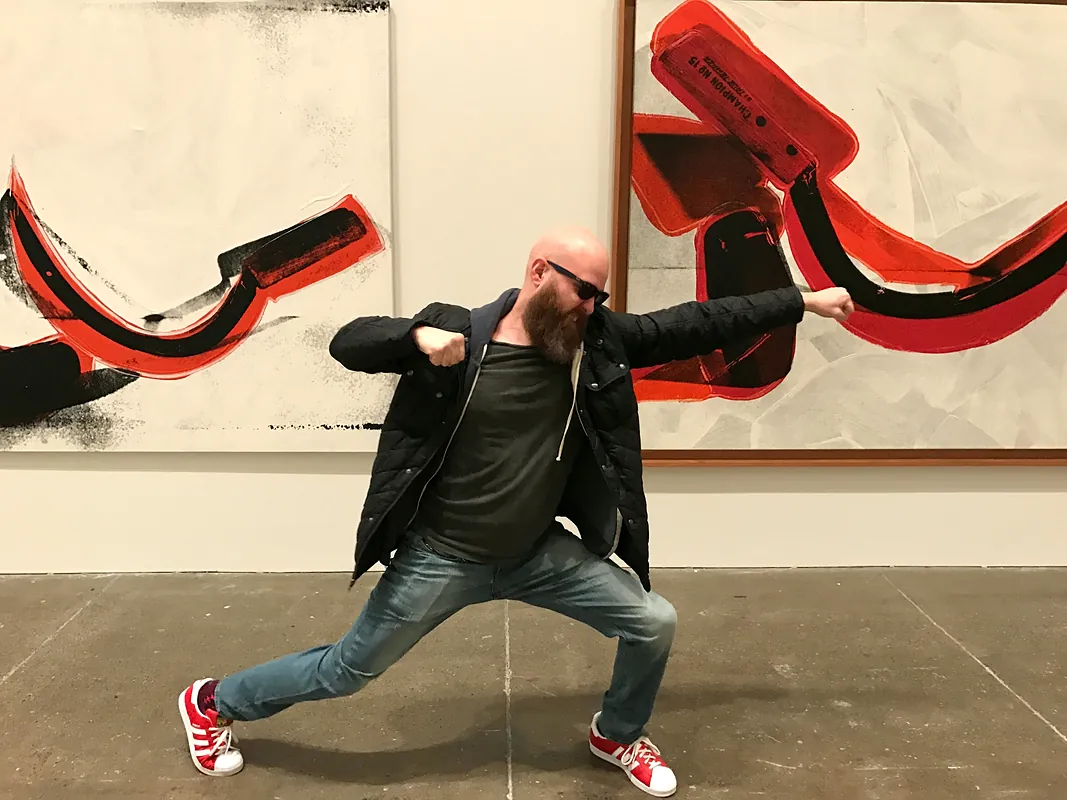
Jeffrey Gilbert striking a playful lunge in front of two large red and black paintings
Jeffrey, striking a pose
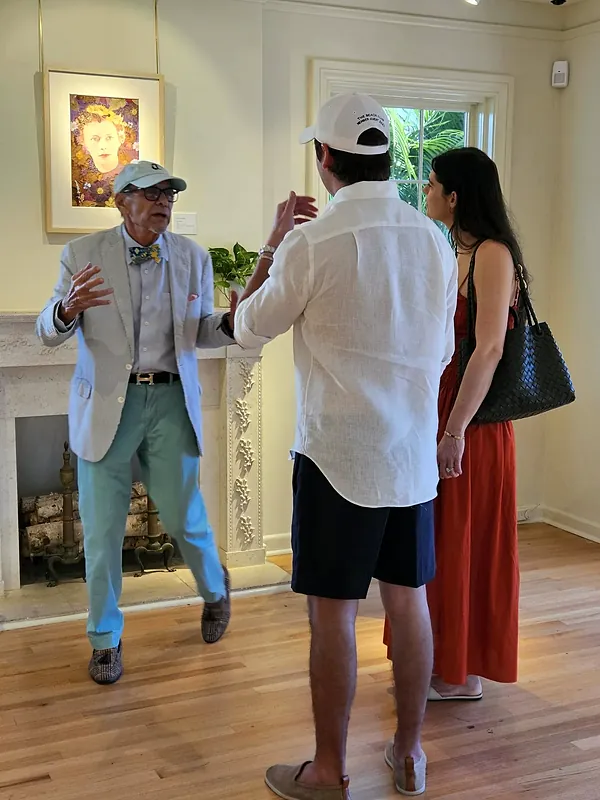
Bruce Helander talking with guests at a show
Bruce, with guests
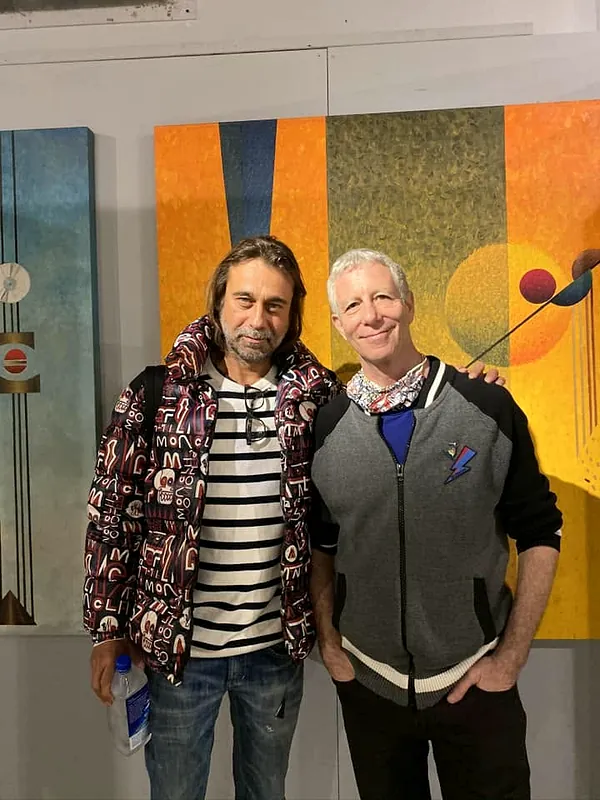
Paul Fisher with the artist and actor Jordi Mollà in front of a Karl Momen painting
Paul with Jordi Mollà, before a Karl Momen painting
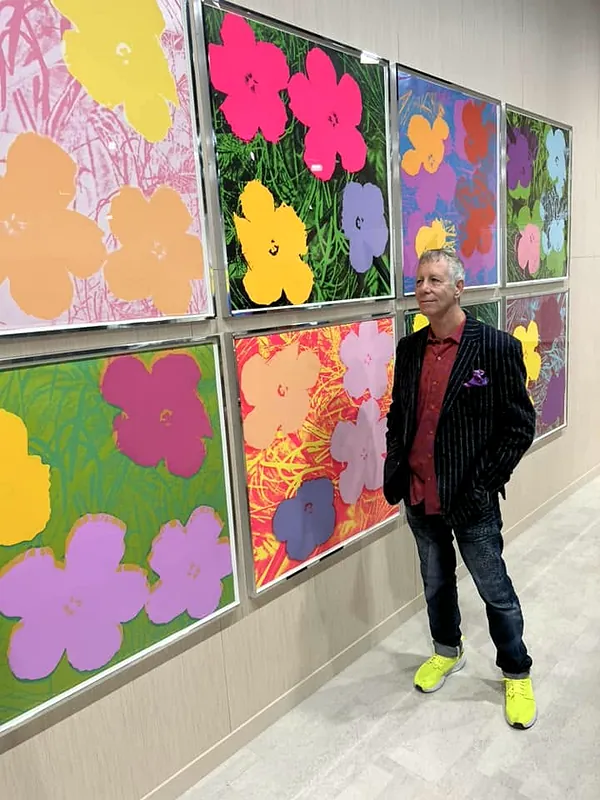
Paul Fisher in front of a wall of bright flower prints
A wall of flowers
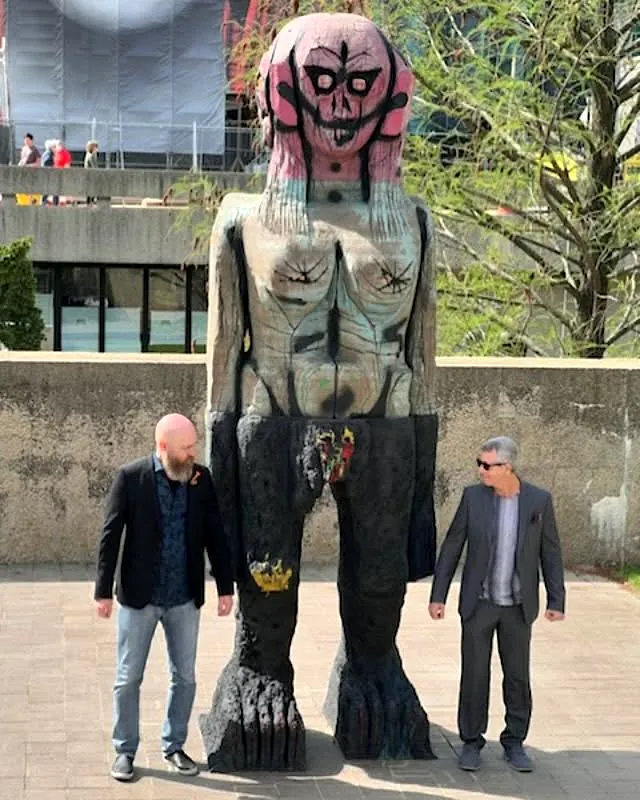
Paul Fisher and Jeffrey Gilbert standing on either side of a giant outdoor sculpture
Paul and Jeffrey with a giant sculpture
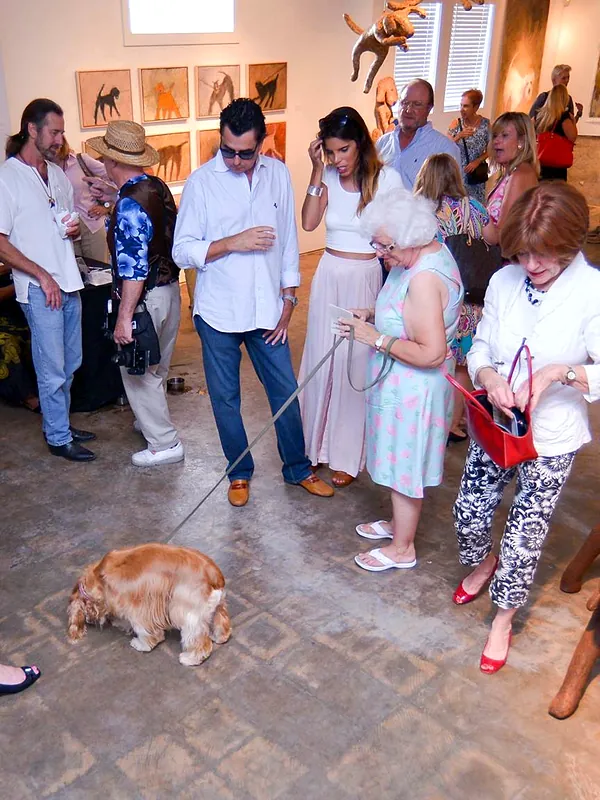
Guests, and a dog, at an opening at the Paul Fisher Gallery
Openings, dogs welcome
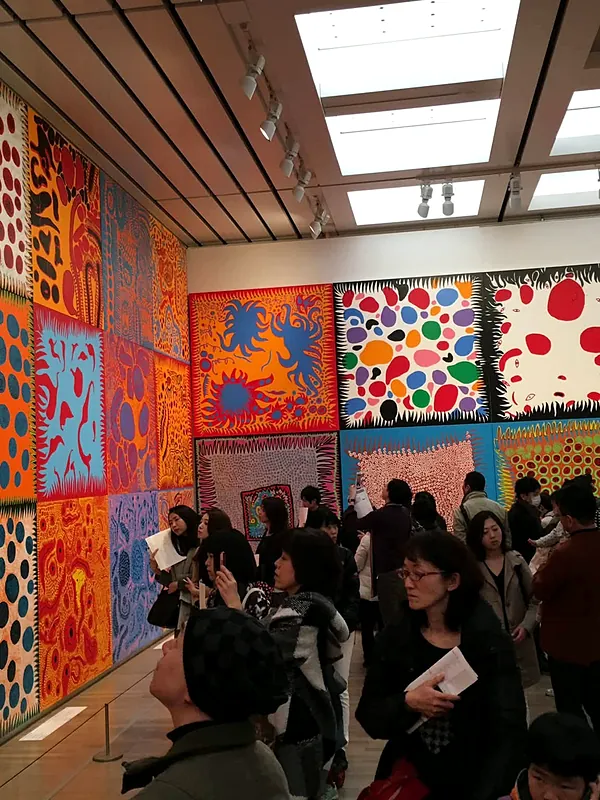
Visitors in a museum gallery hung floor to ceiling with dotted paintings
Museum days

Our story

We brought juried art into the digital age

Juried shows used to arrive by mail: hand-labeled slides, a check, and a jury in a dark room while a projector clicked through the entries. Paul Fisher took the jury online. His asynchronous online jurying is patented (U.S. Patent 8,657,606).

An early $16,000 investment from the Smithsonian helped move juried shows from the slide tray to the screen. The art world followed, show by show.

Now we're doing it again. AI helps us build and run the platform, the cloud scales with every deadline rush, and the savings go to organizers.

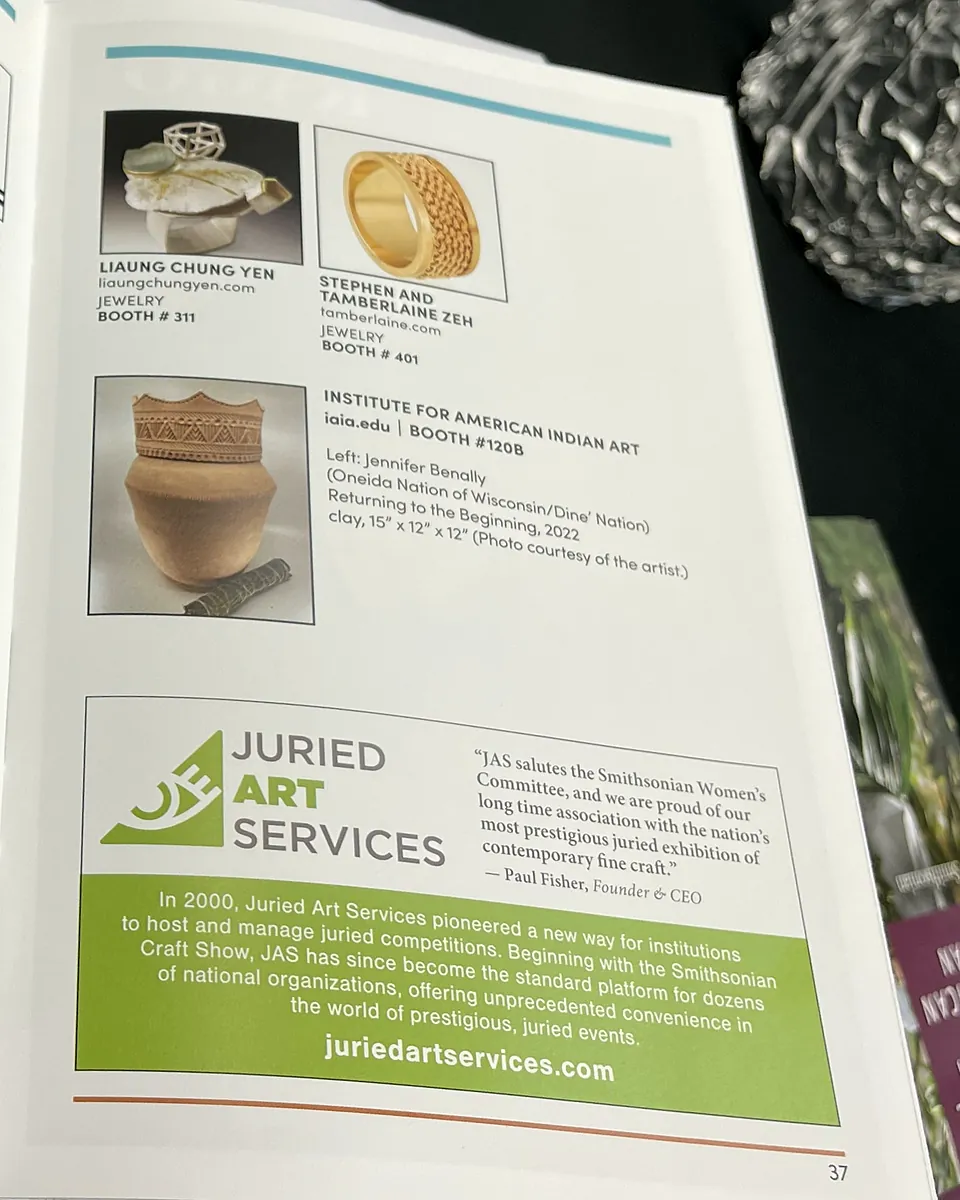
The Smithsonian Craft Show catalog open to the Juried Art Services page and its exhibitor listings, including Stephen and Tamberlaine Zeh's baskets
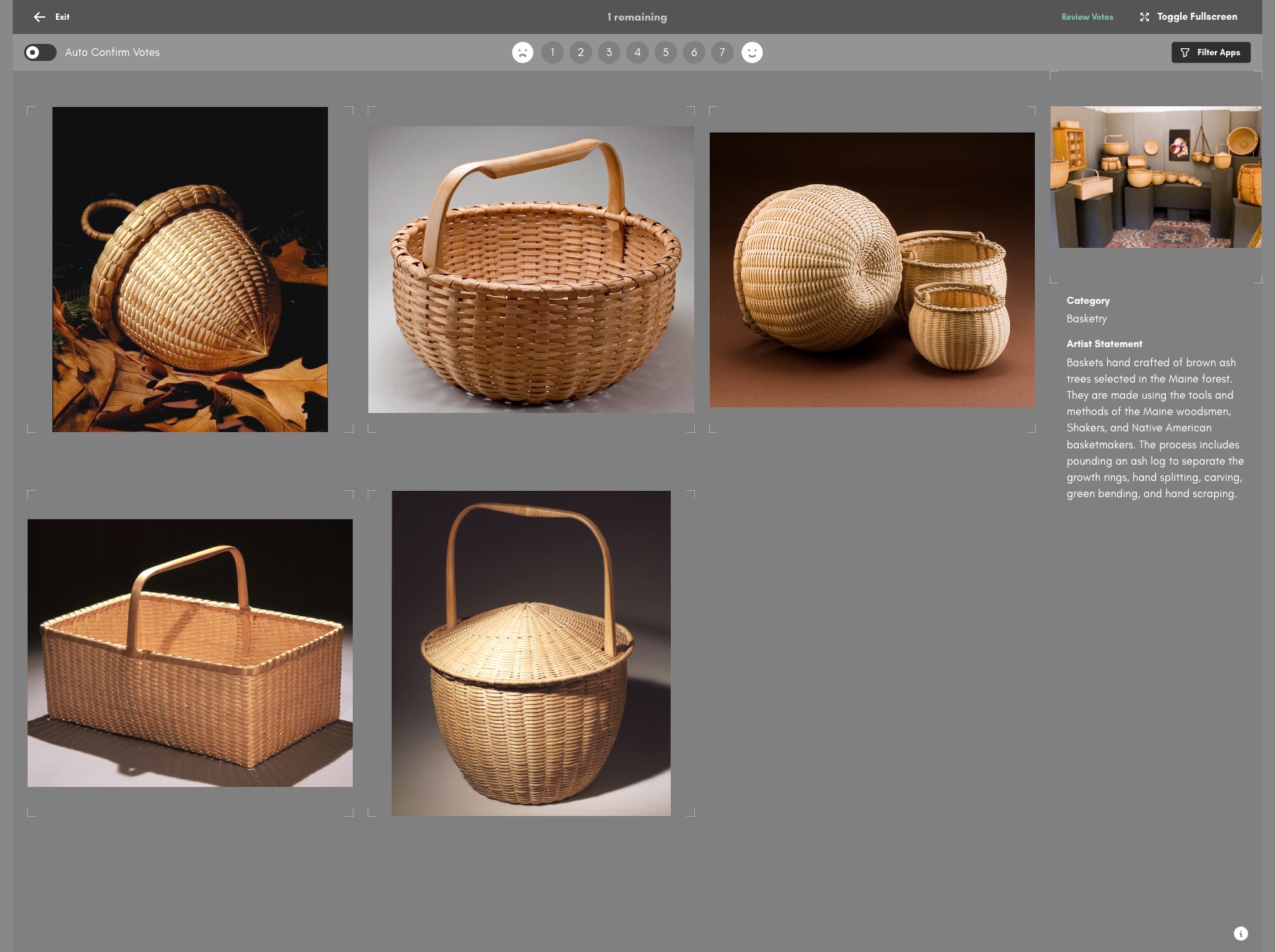
The eJury voting screen showing Stephen Zeh's application: five brown ash baskets, led by his Acorn Basket, his booth photo and artist statement, with the score buttons above

Shown: Stephen Zeh, Acorn Basket and four more brown ash baskets. Shown with the artist's permission.

Submitted through Juried Art Services

The best artists on the best site for artists

Works by David Poyant, Jere Williams, Tor Erickson, Zelma Loseke, Michael Earley, Ann Williamson, Eric Serritella, Connie Noftsier, Laura Kishimoto, Luis Enrique Gutierrez Gutierrez, Stephen Zeh, Namu Cho, John Mascoll, Jennifer McCurdy, Andrea Handy, Jacob Albee, Valerie Holliday, Valerie Bunnell, Ann Marie Cianciolo, Sophia Hu, Ron Grieco, Yeonsoo Kim, Holly Tornheim, Matthew Naftzger, Jenny Ellis, Fong Choo, Jonathan White, Diane Harty, Victoria Moore, Andrew Collins, Nathalia Toledo Barcia, Nicholas Barnes and Ayesha Mayadas.

Where we started

From the first site to today

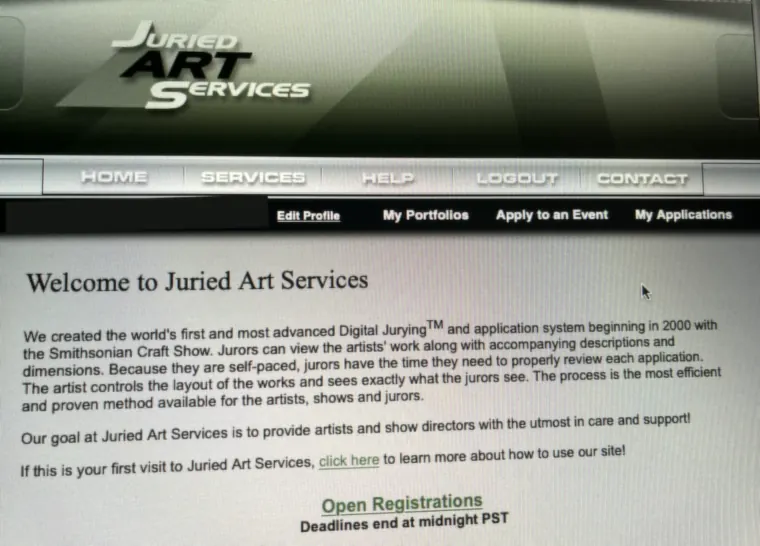
In 2000, jurors still sat in a dark room while a projector clicked through slides, one carousel at a time. That year Juried Art Services put the Smithsonian Craft Show online, and jurors saw every entry on a screen. Slides and mailed checks gave way to digital applications. Now one platform handles everything a show needs, from the first application to opening day. Juried Art Services is the best art submission management system there is.

The original Juried Art Services site: a silver and green header, the menu, and a welcome describing Digital Jurying and its start in 2000 with the Smithsonian Craft Show
The original site, where Digital Jurying began.

The platform

What it does for your show today

Images, works and forms

More of what you need, when you need it

2.5× larger images per side, about 6× the pixels. 3× the detail shots per work. As many application questions as you need, up from 5.

Image size per side2.5×
Detail shots per work3×
Application questions5 → ∞

Before Now

  • Images up to 10,000 × 10,000 px and 50 MB, in common formats like JPG and PNG, straight from a phone

    Each side of an image can be anywhere from 768 to 10,000 pixels, and a file can be up to 50 MB. That is room for a full-size photo straight off a modern phone or camera, with no shrinking first.

    Artists add images from their phone’s camera or photos, a computer, Google Drive or Dropbox.

  • Up to 12 works per application, each with up to 6 detail shots, plus a booth or other image the show asks for

    Each show sets its own numbers: how many works an application holds (up to 12), how many detail shots each work can carry (up to 6), and whether it wants one more image, such as a booth photo, under a name the show chooses.

    A detail shot stays attached to its work, so a juror sees the close-up right beside the whole piece.

    Jennifer McCurdy’s Climbing Coral Vessel, white porcelain carved into branching coralExample: Jennifer McCurdy, Climbing Coral Vessel, porcelain, 18 × 12 × 10 in., one of five works in her Smithsonian Craft Show 2027 application.
  • Add images as they come; anything missing is flagged so nothing gets left out

    Artists can fill an application in over several sittings. Before they submit, it lists what is still needed in plain sentences, for example:

    • “2 more works are required”
    • a work that still needs its detail shot
    • a detail shot not yet attached to a work
    • a missing statement, category, booth image or answer

    Nothing reaches the jury half-finished, and organizers don’t have to chase it.

Phones

Half of artist visits

now come from a phone or tablet. The whole application works on one.

BeforeAbout 90% desktop
NowPhones 42%, tablets 8%, desktop 50%

Phones Tablets Desktop

  • Deadlines first, and Pay now across the screen
  • Each work's controls sit above its image
  • Organizers and jurors can work from a phone too

Help

An assistant for every task, at every turn, at any time*

Late-night application deadlines wait for no one. Neither does our help.

  • AI support and a knowledge base answer when you ask
  • For artists with a question and organizers burning the candle at both ends
  • Our staff helps by day; support stays on while we sleep
  • Never writes, polishes or judges your art

    The assistant answers from the help articles and your own account. It is told never to comment on, praise or critique your work or your statement, never to say which works are better, and never to write or edit your statement for you. Your words stay yours.

* Our AI is assistive, not thieving. We never train AI on artists' artwork, and we honor every artist's privacy choices.

Efficiency

Savings passed on to you

Efficiency gains across our platform mean lower costs for organizers.

6,500+ automated checks on every release

  • Every release is checked automatically, so your requests ship sooner
  • Improvements once built for one client now reach every show
  • Moving our modern platform to the cloud cut application fees from $10 to $5 per application

Accessibility

Built for every artist's eyes

About 1 in 12 men and 1 in 200 women of Northern European ancestry have red–green color blindness. Chances are you know an artist who does. We support them too.

1 in 12men
1 in 200women
  • Red–green, blue–yellow and grayscale modes keep warnings and confirmations distinct

    Every site has a color vision setting with four choices:

    • Standard
    • Red–green: confirmations turn blue, warnings yellow and dangers orange, so “done” and “stop” never look alike
    • Blue–yellow: dangers red, confirmations teal, warnings amber
    • Grayscale: messages are told apart by lightness and icons, with extra-strong text contrast

    It works the same for artists, organizers and jurors.

  • Talk instead of type, and hear answers read aloud

    Turn on the assistant’s microphone and just talk. With Send automatically on, it sends when you stop speaking and reads each answer aloud, so a whole question-and-answer can happen hands-free.

    Pages also have Listen buttons that read the page to you, and you can hide them if you don’t use them. Talking works in browsers that support speech.

  • Light or dark, 12 colors or monochrome, all meeting web contrast guidelines

Your data

Your data travels

No lock-in. Your applications, answers, images and audience are yours.

  • Spreadsheet exports of applications, answers, jury scores and billing

    From a jury, one download gives every application in a spreadsheet: contact details, each of your questions in its own column, the coupon used, the amount and date paid, status and total score.

    Billing has its own export, and most lists in the organizer site have an Export button. The files open in Excel, Numbers or Google Sheets.

  • Export your contacts with each person's subscription status, so anyone who unsubscribed from your show stays unsubscribed wherever you take the list

    The contacts export lists each person’s email, name, lists, where they came from, the date they were added, and their status: Subscribed, Opted out of your organization, Opted out of everything, or Suppressed (an address that bounced or complained).

    Take the list to any email tool and the people who said no stay no.

  • Grow your list as artists and art lovers favorite you on your organization's home page and, coming soon, on artist storefronts
  • Every image in one download, as uploaded or sized from thumbnail to 8 × 10 print

    Pick the applications, choose Images (ZIP), and get one file. Keep the originals as uploaded, or have every image resized for its job: thumbnails, screen sizes (720p, 1080p) or print sizes from 3×5 up to 8×10.

    Square or round crops, PNG or JPEG, and removing photo details such as location are options too.

  • For your printer, catalog, accountant, board or own systems

Security

Security at every layer

Your information is protected from sign-in to payment, to standards with hard names you never need to learn. Open any line to see what is working for you.

  • Passwordless sign-in by passkey, fingerprint, face, text or email link: no password to steal

    Nobody has a password with us, so there is none to guess, reuse or leak. People sign in with Google, a link or code sent by email, a code by text message, or a passkey, which is the fingerprint or face check already on their phone or computer.

  • Every connection is encrypted and protected

    Everything sent between a browser and Juried Art Services travels encrypted, the same protection banks use. Its technical name is TLS (Transport Layer Security): it scrambles what is sent so nobody in between can read or change it, and proves to the browser that it is really talking to us. Every page is served this way, and anyone who types a plain http:// address is sent to the secure one.

    Behind the pages, the connections to our databases are encrypted and checked too, and the databases have no door to the public internet. Our services also follow a browser rule called CORS (Cross-Origin Resource Sharing) with an allowlist: they answer only our own sites, so a look-alike site can’t quietly act on someone’s behalf.

    Why it matters: since 2018, Chrome has labeled any page without this protection “Not secure” beside the address, where artists see it before they type a name or a card. Anything sent without it can be read or changed along the way.

  • Card payments meet the card industry’s security rules

    When an artist pays, the card number goes into a secure form run by Stripe or PayPal, not into our pages. It travels straight to them and never reaches our servers, or yours.

    Card processors work under the card industry’s security rules, PCI DSS (the Payment Card Industry Data Security Standard), written by the PCI Security Standards Council and tightened again in March 2025. Keeping card numbers off our systems leaves them with the companies built to guard them.

    Why it matters: the card brands, not a court, set the penalties for getting this wrong, case by case and with no set amount. A business that is breached or found out of compliance can be placed on Mastercard’s MATCH list for five years, and most processors turn away anyone on it. That can mean losing the ability to take cards at all.

  • Your data and your artists’ privacy, protected

    Privacy laws give people rights over their information, and we build to them:

    • GDPR, the European Union’s General Data Protection Regulation
    • CCPA, the California Consumer Privacy Act, as amended
    • COPPA, the U.S. Children’s Online Privacy Protection Act

    So anyone can close and delete their own account, ask for a copy of their information, and switch off analytics and advertising tags in Your Privacy Choices; a browser’s Global Privacy Control signal is honored automatically. Accounts start at age 16, nobody under 13 takes part, and students’ details are kept away from the AI assistant.

    Why it matters: privacy fines are counted per violation and per person, so they add up fast. GDPR fines can reach €20 million or 4% of a company’s worldwide revenue. California sets up to $2,663 per violation, or $7,988 when it is intentional or involves minors, and lets people sue for $107 to $799 each after a data breach. The FTC can seek up to $53,088 for each COPPA violation.

    Sources: EU GDPR Article 83; California Privacy Protection Agency, amounts from January 2025; FTC civil penalty amounts for 2025, unchanged for 2026.

  • Your email reaches inboxes and follows the law

    Mail services decide in a split second whether a message is real. We give them every proof they look for:

    • SPF (Sender Policy Framework) lists the servers allowed to send our mail
    • DKIM (DomainKeys Identified Mail) signs each message, so mail services can tell it came from us unaltered
    • DMARC (Domain-based Message Authentication, Reporting and Conformance) tells them to reject anything pretending to be us, set at its strictest level

    Our mail also follows CAN-SPAM, the U.S. law for commercial email: honest senders and subject lines, our postal address in marketing email, and a one-click unsubscribe that is honored. Addresses that bounce or complain stop getting mail.

    Why it matters: since 2024, Gmail and Yahoo have required these proofs from anyone sending in bulk, and since May 2025 Outlook has sent mail without them to Junk. Without them, a deadline reminder lands in spam. The FTC can also seek up to $53,088 for each email that breaks CAN-SPAM.

    Sources: Google and Yahoo sender guidelines (February 2024); Microsoft Outlook high-volume sender requirements (May 2025); FTC civil penalty amounts for 2025, unchanged for 2026.

  • Fine-grained permission controls

    Everyone gets only the access their part of the show needs. Roles include organization owner, organization admin, event manager and juror, and each one covers either your whole organization or a single event.

    One Permissions page shows every admin account and everyone holding a role, with a Revoke button beside each. Artists have the same control over their own account in People with access.

Messages

One inbox for the whole show

Conversations stay in one place, not scattered across personal inboxes.

  • One inbox for organizers, artists and jurors across all three sites
  • One conversation per application, start to finish

    Every message about an application, from the first question to the results letter, lands in the same conversation. Anyone picking it up later sees the whole history in one place.

  • Results letters stand apart from everyday messages

    A results letter arrives in the application’s conversation, drawn in its own tinted frame so it can’t be mistaken for a passing note. The application page shows a matching results card that opens the letter.

  • Sent from our own system, signed the way Gmail, Yahoo and Outlook require

Plans

A plan for every organizer

From a brand-new show to an organizer running more than 100 a year, with simple terms and no surprises.

Your first showSmall and new events get up and running with our team at their side.
Growing showsFestivals, galleries, museums and schools adding shows year after year.
100+ shows a yearThe biggest organizers, running every show from one place.

Built for running 100+ shows a year, with tools most platforms don't have

  • One checkout that pays for a group of shows

    Running several shows? Group them into a package. An artist applying to one show can tick the others in the package and pay for all of them in a single checkout. The application is filled in for each show from the same form, and each one can still be edited until its deadline.

    Shows past their deadline are grayed out with the reason. Late fees, if any, show on their own line. Pair a package with a coupon to offer a discount for applying to more than one show.

    Example only; show names and amounts are made up.

  • Coupons and member discount codes

    Coupons take a fixed amount or a percentage off the application fee, for one show or for a whole package. You choose:

    • single use, a set number of uses, or unlimited
    • whether the limit counts per application, per artist across a package, or for the code in total
    • start and end dates

    Member discounts: generate a batch of unique single-use codes in one step and hand one to each of your organization’s members, so each member gets a discount on each application. Every code keeps its own usage log, which you can export.

    Ready-made starting points include Membership discount, First application discount and Limited-time promotion. An artist uses one code per application.

  • Site planning

    Lay out the show once and reuse it year after year. Set the venue (indoor, up to 4 floors, or outdoor with named streets), its size in feet, the aisle width and gap between booths, and your booth sizes, each with its own booth fee. Then drop in streets, entrances, a stage, a food court, restrooms, food trucks and more.

    MAIN ST 12345678910 11121314151617181920 Stage Food court Restrooms Entrance N
    Standard 10×10Corner 10×10One artist’s booth

    Booths can be assigned by application or by artist, optionally in jury-score order. The artist’s booth arrives with their results letter to accept or decline, and “See the show floor” shows them where it is, ready to print. Artists see booth numbers and sizes, never other artists’ names.

  • Rolling juries

    Most shows jury after applications close. A rolling jury decides as entries arrive. Here are the three ways a show can run its jury:

    Standard juryApplications close first. Then every juror scores every work, over one or more rounds, and the show decides from the scores.
    Rolling juryDecisions happen while applications are still open, as each one comes in and is paid. Made for shows that fill first come, first served, with seat limits per show or category.
    Silent juryA switch on a standard jury: artists’ names are hidden from jurors while they vote, so the work speaks for itself.

    A rolling jury can notify artists the moment a decision is made, let them resubmit, add optional scoring, and stop at a seat limit. Decisions are approve, decline, incomplete, waitlisted or withdrawn.

  • One inbox for the whole team

    Every message to your organization lands in one shared inbox that the whole team works from, sorted into folders: all messages, applications by show, jurying and system notices. Search by artist name, email, phone, application number or the words in a message.

  • AI assistants for organizers and artists

    For organizers, an assistant can set up a show with you: create the event, set fees, dates and categories, and add your application questions. It asks before it changes anything, with Allow, Allow for this task or Don’t allow.

    For artists, an assistant can start an application with them, add the images they pick and check that nothing is missing. It never critiques art, picks works, writes statements, pays or submits.

  • Performance dashboards for the whole organization

    See what brings artists in. The marketing dashboard charts each day’s visits, prospectus views, applications and paid applications, with markers for the days your emails went out and for deadlines, so you can see which send moved the numbers.

    Email blastEmail blastLate fee ends 30 days
    Gray tracking-link visits, white applications, red paid applications. Illustration.

    Emails you send from the platform get their own report: delivered, opened, clicked, unsubscribed and complaints, hour by hour for the first two days, and which links people clicked.

    Emails you send elsewhere (your newsletter, social posts, print) can carry a tracking link and an open-tracking pixel, so those visits and applications show up on the same chart.

  • Year-over-year stats

    Each show’s dashboard charts applications as they come in beside a dashed line for last year, lined up to the same point in the application window. Pick which past show to compare against, and see at a glance whether you are ahead of last year or behind.

Giving back. Free for 501(c)(3) charities, and we contribute to and sponsor charitable shows and causes.

Fair, careful jurying

Every work, in full detail. On the juror's own time.

Jurors see each work at full size on any screen, and can look closer at a carved edge or a gilded curve, the way they would at the booth.

Try it. Click or tap the work to look closer. On a phone, drag the lens and pinch to zoom.

Jennifer McCurdy's Gilded Contour Bowl: white porcelain carved into flowing ribbons, gilded inside with gold leaf
Jennifer McCurdy, Gilded Contour Bowl, 2026. Porcelain and 24-karat gold leaf, 9 × 11 × 11 in. Photo: Gary Mirando.

How we work with arts organizations

Made for the whole show

Three tools

Built for the people who run shows.

Organizers, jurors and artists each get a tool built for their part.

eJury voting

Fair, careful jurying.

Every detail, on any screen, scored on the juror's own time.

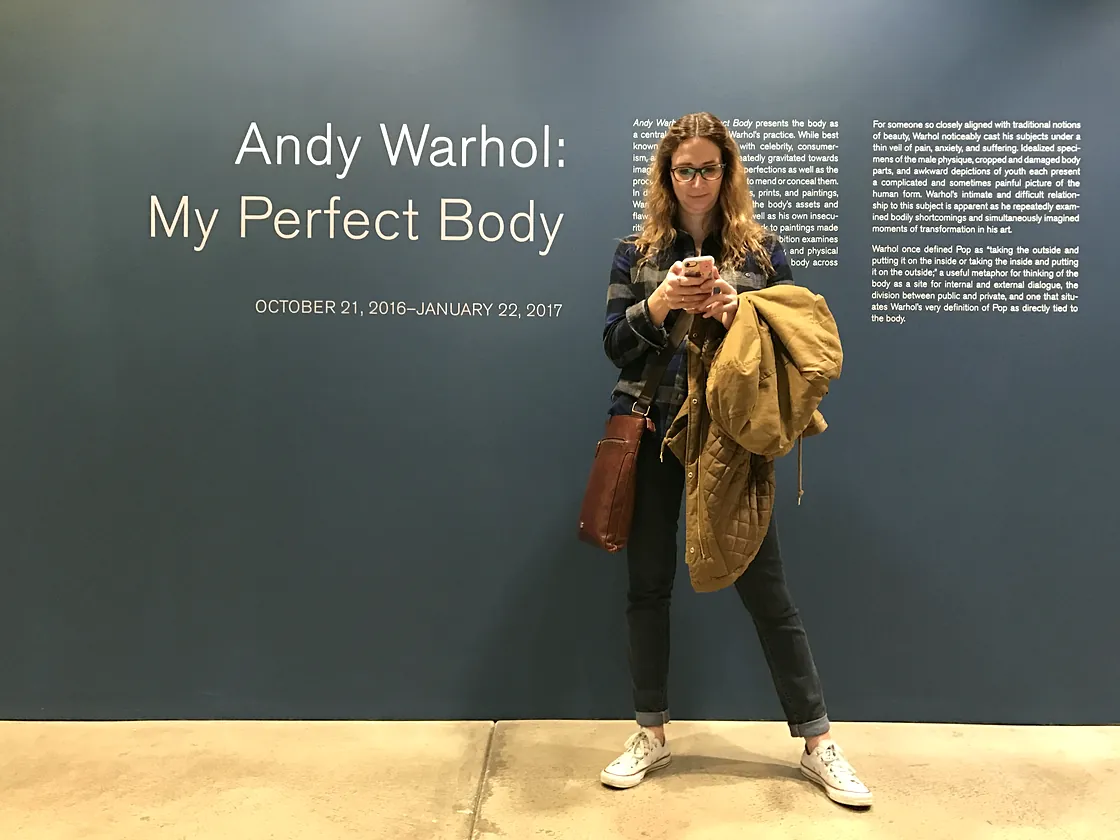
Jeffrey's wife at the entrance to the exhibition Andy Warhol: My Perfect Body

People you can reach.

When you call or write, you reach our team.

In their words

Trusted by the shows we serve

Museums, foundations, fairs and the Smithsonian Craft Show, some of them with us for more than two decades.

We enthusiastically endorse JAS for its service, its flexibility, and its ability to constantly upgrade and improve each year.

Smithsonian Craft ShowSmithsonian Women’s CommitteeSmithsonian Craft Show, with Juried Art Services since 2000

The Boca Raton Museum of Art has used JAS for our juried exhibitions for many years. I find the system is easy to navigate for administrators, artists, and jurors. JAS customer service is top notch, with staff readily available for questions and assistance.

Boca Raton Museum of ArtMartin HanahanDeputy Director for Museum Operations, Boca Raton Museum of Art

We have used Juried Art Services continuously since July 2017 to assist in eight national juried art competitions for artists with Bipolar Disorder. Juried Art’s exceptional software allowed the Foundation to not only gather submissions from thousands of artists across the nation for its annual INSIGHTS competitions, but also to present the entries to an esteemed panel of gallerists, museum executives, major art collectors and artists to judge and rank each one. The care, sensitivity, user-friendly internet interface and knowledgeable customer service made the experience exceptional for all involved.

The Ryan Licht Sang Bipolar FoundationDusty and Joyce SangCo-Founders, The Ryan Licht Sang Bipolar Foundation

The data required to pull an exhibit of merit together demands a tool that manages the process for you. That is what Juried Art Services provided us. We would have been severely limited in our ability to manage the art submission and jurying process without the services and team support of Juried Art Services. Every detail needed from each artist and work of art submitted was documented throughout and following the jurying process. We sincerely thank Juried Art Services.

African Orphan Educational FoundationKathie KrehPresident and Founder, African Orphan Educational Foundation, Inc.

Providing high school students with a real-world experience of entering a juried competition is invaluable, and Juried Arts Services has been an important partner in helping make that opportunity possible. When I first created this program several years ago, Juried Arts Services came to my rescue as I was first researching an online jury platform for a high school portfolio competition. Their team was incredibly helpful in every aspect of the competition including their fee structure. Over the years, I have watched the platform continue to evolve and improve. The technical support they have provided, often at all hours, has been outstanding. I deeply appreciate their ongoing commitment to our Art Portfolio Contest for High School Seniors.

Florida State FairgroundsBrenda GregoryCoordinator, Art Portfolio Contest for High School Seniors, Florida State Fair

From colleagues and mentors

I’ve used almost every system out there and I can say unequivocally that Juried Art Services is the smartest, easiest and most professional method out there.

Bruce HelanderBruce HelanderArtist, Critic and Curator; Former Dean of Admission, Rhode Island School of Design; Juror, Smithsonian Institution and Philadelphia Museum of Art

Paul Fisher has been my friend and consultant for many years and he has traveled around the world with me, giving his time and talent and adding to the success of my projects. He has energy, enthusiasm, ambition and intelligence and he is equally comfortable and competent in the business and art worlds.

Dale ChihulyGlass artist, on Paul Fisher

In the years I have known Paul Fisher, I have found him to be a man of intelligence, vision, optimism and compassion. In his work with the Smithsonian, I know he applied a great deal of tenacity and creativity in the development of the Jury system they now employ and I have confidence in his ability to work hard, smart and successfully.

William SessionsFormer Director, FBI, on Paul Fisher

The team

The people behind Juried Art Services

An artist, a gallerist and the people who build the platform: a small team that works at the shows it serves.

Portrait of Paul Fisher, founder and CEO, in a pinstripe jacket and pink tie
Founder & CEO

Paul Fisher

Paul has run online jurying for more than two decades, and has been a leader in art show management, jurying and galleries for over 40 years. In 2022 the Smithsonian Institution honored him with its Innovator Award. Today he also runs the Paul Fisher Gallery in Palm Beach.

Portrait of Jeffrey Gilbert, co-founder, smiling in a gray suit at an evening event
Co-Founder

Jeffrey Gilbert

Jeffrey led the platform's rebuild from the ground up. Before that, he ran systems for Fortune 50 companies. When he isn't building, you'll find him in a museum.

Portrait of Bruce Helander in an orange hat and glasses, arms folded over a red chair
Senior Special Advisor

Bruce Helander

Bruce is an artist known for his paper collages, and a former provost and vice president for academic affairs at the Rhode Island School of Design. His work is in the collections of the Metropolitan Museum of Art, the Guggenheim, the Whitney and the Smithsonian. He writes about art, has had illustrations in The New Yorker, and is a member of the Florida Artists Hall of Fame.

Juried Art Services

Running a show?
Let's talk.